
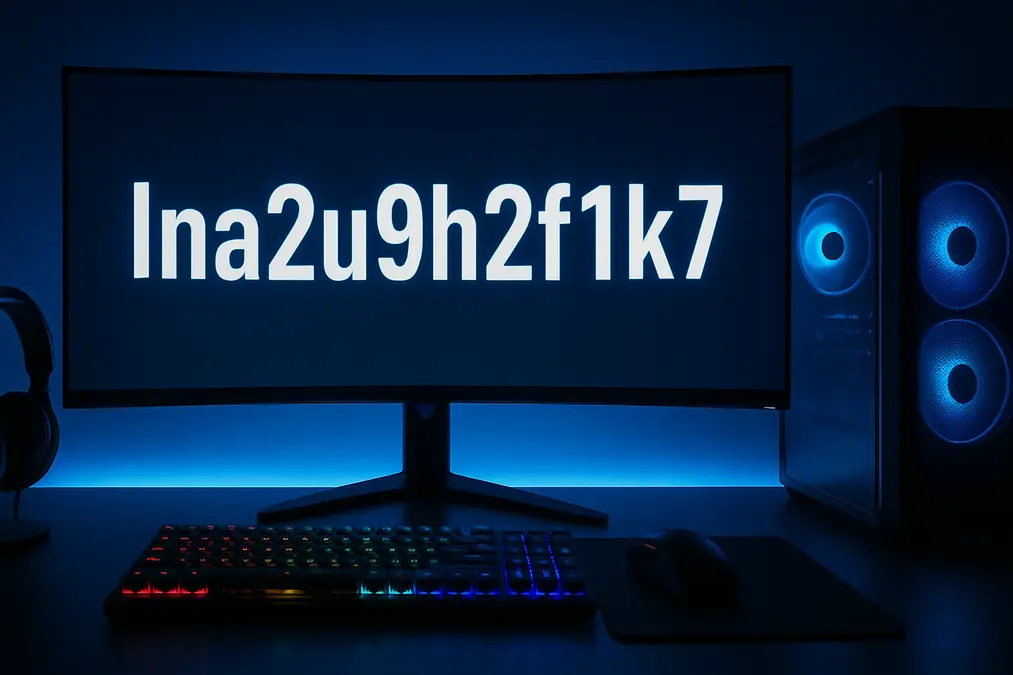
In today’s digital age, codes, algorithms, and encryption methods drive everything from online payments to private communications. Among these, a unique term has recently sparked curiosity—lna2u9h2f1k7. Though it may appear to be just a random string of characters, it represents a concept deeply tied to cybersecurity, encryption standards, and the future of data protection. Let’s explore what makes lna2u9h2f1k7 important and how it connects to modern digital security.
What Is lna2u9h2f1k7?
The term lna2u9h2f1k7 might sound cryptic, but in cybersecurity language, such strings are often used as hash keys, unique identifiers, or encryption tokens. These identifiers ensure data integrity and authentication across digital platforms. In simpler terms, when sensitive information—like passwords or transactions—is processed online, it is converted into a secure code such as lna2u9h2f1k7 to protect it from hackers or unauthorized users.
This transformation process is known as hashing. Once a piece of data is hashed into a string like lna2u9h2f1k7, it becomes nearly impossible to reverse-engineer, meaning even if someone intercepts the data, they can’t easily decode the original information.
The Role of lna2u9h2f1k7 in Modern Encryption
Encryption algorithms rely on complex mathematical functions that generate unique alphanumeric sequences. These sequences act as keys for encoding and decoding data. lna2u9h2f1k7 could represent such a key in an encryption framework. Its randomness ensures that every transaction, login session, or message transfer remains unique and secure.
In industries such as finance, healthcare, and e-commerce, the reliability of encryption systems determines trust. A single compromised key could lead to massive data leaks or financial loss. Therefore, systems generate identifiers like lna2u9h2f1k7 using advanced algorithms such as SHA-256 or AES, designed to resist brute-force attacks and maintain confidentiality.
Why Randomness Matters in Digital Codes
The strength of a digital key lies in its unpredictability. Codes like lna2u9h2f1k7 are not random by accident—they are algorithmically random, ensuring that no two keys ever match. This randomness protects against pattern recognition, which hackers often exploit.
For instance, when a user logs in to a secure website, the system assigns a temporary token (sometimes resembling lna2u9h2f1k7) that expires after a short time. This mechanism prevents session hijacking and strengthens authentication. The more random and complex the token, the harder it becomes for malicious software to predict or reproduce it.
Applications Beyond Security
While the most direct use of identifiers like lna2u9h2f1k7 lies in cybersecurity, their application extends to data tracking, cloud storage verification, and software development. Developers use such identifiers to label, version, and manage massive datasets without confusion. In blockchain systems, similar codes represent transaction hashes, ensuring each record in the ledger remains unique and immutable.
In artificial intelligence and big data, identifiers like lna2u9h2f1k7 can be attached to data samples for traceability. This helps maintain transparency in data-driven decision-making, making it easier to audit or retrace the origin of any information used by machine learning models.
The Human Side of Code Security
Behind every complex code lies a human intention—to create safety in a world dominated by digital exchange. Codes like lna2u9h2f1k7 symbolize our continuous battle against cyber threats. However, technology alone is not enough. Users must adopt responsible practices—strong passwords, multi-factor authentication, and regular software updates—to complement encryption systems.
When both humans and technology align, the result is a robust, layered defense that deters intrusions and upholds digital privacy.
The Future of Encryption and Identifiers
As technology evolves, the mechanisms that generate secure identifiers like lna2u9h2f1k7 will become even more sophisticated. Quantum computing, for example, may soon redefine encryption methods, requiring entirely new forms of keys and security patterns. Still, the core idea will remain the same: to ensure that every piece of data transferred online stays private, verifiable, and tamper-proof.
The next generation of digital systems will rely on dynamic encryption—self-regenerating codes that adapt in real time to potential threats. And in that evolution, identifiers like lna2u9h2f1k7 represent the first step toward smarter, more resilient cybersecurity.
Conclusion
Though lna2u9h2f1k7 may look like a random combination of letters and numbers, it embodies a powerful concept—the safeguarding of digital information in an interconnected world. It represents the invisible armor protecting our online presence, ensuring that trust remains the foundation of every digital transaction. As technology advances, the importance of such identifiers will only grow, becoming an essential language of digital trust and security.